




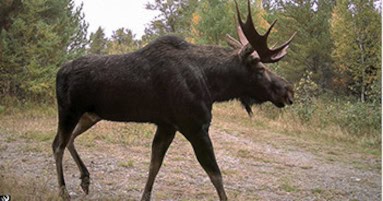


NORTHERN MICHIGAN – The Michigan bull moose, a 1,000-pound symbol of the Upper Peninsula’s wildness, faces significant challenges today. Researchers are examining population trends and hurdles to ensure the species’ survival.
“Michigan’s moose are a vital part of the Upper Peninsula’s ecosystem and identity,” said Tyler Petroelje, wildlife research specialist for the Michigan Department of Natural Resources (DNR). A new study aims to uncover factors limiting moose population growth and ensure a clearer future for the species.
Moose history in Michigan
Once widespread across Michigan, moose populations declined in the 19th century due to unregulated hunting and habitat loss. A reintroduction attempt in the 1930s failed, but the 1980s “Moose Lift” transported 59 moose from Ontario to northwest Marquette County. While the population in this region has grown to over 400 today, it remains far below the goal of 1,000 animals set for the year 2000.

From 1997 to 2007, the population grew by 10% annually, but growth slowed to less than 1% annually after 2009. While no formal surveys have been conducted in the eastern U.P., biologists have documented resident moose and reproduction in this region based on field observations and public reports.
Why Moose matter
Understanding factors limiting moose populations provides insight into the broader ecological health of the U.P. Moose are culturally significant as a symbol of Michigan’s wilderness and play a key role in Indigenous traditions.
As the largest native deer species in Michigan, moose shape forests by browsing on trees like aspen and birch, creating cascading effects on ecosystems, including impacts on deer, birds, insects, and plants. However, pregnancy rates in the western U.P. are lower than the North American average, and low twin birth rates may signal environmental limitations.
Parasites, disease, and warmer temperatures are also concerns. Brainworm, carried by white-tailed deer, is lethal to moose, causing neurological disease. Additionally, as moose are adapted to cold climates, warming temperatures can increase stress and reduce reproduction.
Moose-vehicle collisions are another threat, with 47 reported fatalities over the past three years. While wolves can prey on moose, previous studies in Michigan show predation has little impact on adult mortality. However, predation is a significant factor in calf survival, as seen in Minnesota.
Aerial survey
Since 1997, DNR wildlife biologists have conducted biennial aerial surveys to estimate the western Upper Peninsula (U.P.) moose population, focusing on Marquette, Baraga, and Iron counties. Conducted in winter, these surveys take advantage of the snowy landscape, making moose easier to spot. In 2023, the survey estimated 426 moose, with a 95% confidence interval ranging from 334 to 518.

This year, researchers will also launch a new project: Factors Limiting Moose Population Growth in the Western Upper Peninsula. The study, in collaboration with the Keweenaw Bay Indian Community (KBIC) and Northern Michigan University (NMU), seeks to better understand the challenges facing Michigan’s moose.
New Moose study
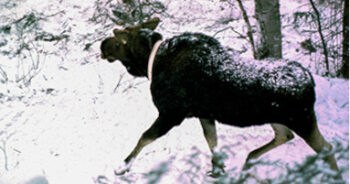
Researchers plan to outfit 60 moose with tracking equipment over two years, beginning with 20 moose in the first year. Radio collars will collect precise location data, shedding light on survival, mortality, reproduction, and birthing patterns.
“There is a need to examine why moose population growth in the Upper Peninsula has been stagnant over the past decade,” said Diana Lafferty, NMU associate professor of biology. Researchers will assess reproduction, survival, and factors like parasites, disease, predation, and habitat changes.
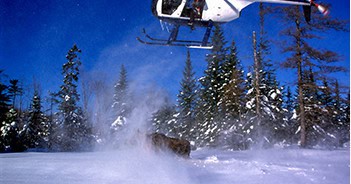
Helicopters and ground crews will capture and collar moose across a 500-square-mile area in the Michigamme Highlands. The public is advised to avoid these areas during the operation to ensure safety.
Looking ahead
Though moose are considered a game species in Michigan, hunting has been banned since the 1800s. The Moose Hunting Advisory Council recommends allowing hunting only if the population sustains 3% annual growth.
By studying moose population trends and challenges, researchers aim to improve management strategies that support both moose and their ecosystems. For more information, visit Michigan.gov/Moose.