


By Vivian La and Ed Ronco
Interlochen Public Radio. UpNorthVoice.com contributed to this story.
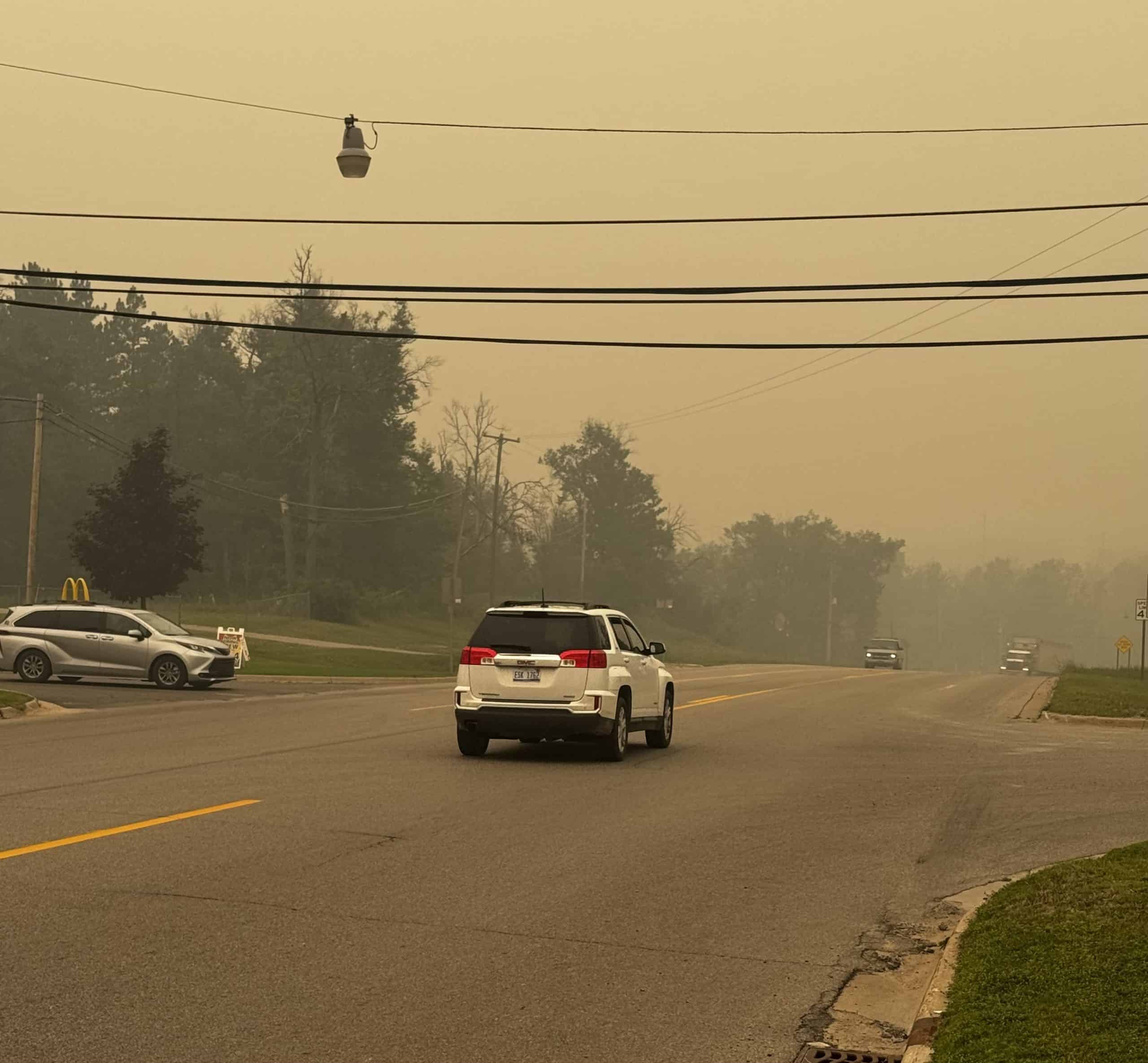
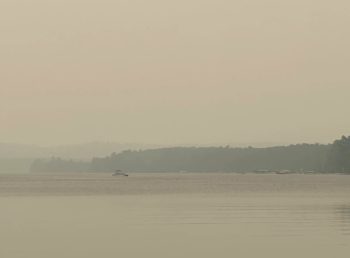
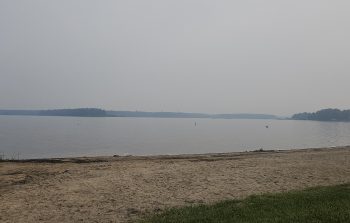
NORTHEAST MICHIGAN — A thick blanket of brown smoke from wildfires burning in Minnesota and Canada has settled over northern Michigan.
Air quality across Crawford, Roscommon, Ogemaw, Oscoda and Iosco counties is very poor. Officials recommend that people with health conditions stay indoors whenever possible.
During these events, residents may notice hazy skies, the smell of smoke or ash in the air. As smoke moves into the region, the Air Quality Index (AQI), a tool used by the U.S. Environmental Protection Agency (EPA) to measure air pollution, can reach unhealthy levels.
According to Paul Berg, M.D., M.H.A., chief medical officer and senior vice president at MyMichigan Health, poor air quality can affect everyone. However, children, older adults, pregnant women, and people with heart or lung disease face the greatest risk.
People with asthma, chronic obstructive pulmonary disease (COPD) or other respiratory illnesses may experience coughing, wheezing, shortness of breath and flare-ups when exposed to wildfire smoke.
Even healthy people can develop irritated eyes, nose and throat, coughing or difficulty breathing when air quality becomes very unhealthy.
Most of northern Michigan was under an air quality alert Wednesday. At a monitoring station in Houghton Lake, air quality was listed as “unhealthy for sensitive groups” Wednesday afternoon. In Seney, in the Upper Peninsula, air quality was rated “unhealthy,” meaning everyone was at risk of adverse health effects.
Residents should limit time outdoors when air quality worsens, especially during strenuous activity. Keep windows and outside doors closed, use air conditioning or an air purifier when available, and set vehicle ventilation systems to recirculate indoor air.
By about 4 p.m. Wednesday, the smoke was so thick that visibility across the AuSable River Valley at the M-33 bridge in Mio was nearly gone.
The same conditions were reported in the Traverse City and Boyne areas.
“We currently can’t see across (Lake Charlevoix),” said Jenny Clasman, executive director of the Boyne Area Chamber of Commerce, which canceled an outdoor concert scheduled for Wednesday night.
“I can see across the street, but it’s definitely foggy, cloudy. There is ash on our cars right now and it smells like burning tires.”
Clasman, who has asthma, said she was having trouble breathing and was wearing an N-95 mask outdoors.
Residents may not get much relief this week.
“It’s going to be with us certainly for Thursday, and there’s a pretty good chance it’s going to hang around into the day on Friday before we can really start to displace it,” said Jeff Zoltowski, a meteorologist at the National Weather Service office in Gaylord.
The fires are hundreds of miles from Michigan, but until they settle down or are extinguished, smoke will continue to drift into the state whenever winds blow from the northwest.
From her vantage point about halfway out Old Mission Peninsula, Del Buono said she had lost sight of an island that is normally visible about a mile away.
“Right now, I can’t even see the water at all, let alone the island or across the bay,” she told IPR.
Jim Haywood, senior meteorologist with EGLE, said, “We’re seeing new fires breaking out all the time.”
Haywood said smoke forecasts currently look ahead 48 hours and are issued with help from meteorologists across the Midwest.
Because of the intensity of the fires, EGLE said its air quality alert will remain in effect through Thursday and could continue into Friday.
Days like this, with multiple environmental hazards, are a reminder that northern Michigan is vulnerable to the effects of climate change, Del Buono said. Average summer temperatures in Michigan have increased by 2.3 degrees Fahrenheit, according to data from the research nonprofit Climate Central.
Hotter temperatures across the United States and Canada are making the conditions that cause wildfires to ignite and spread more common.
“We are not avoiding the impacts of climate change, as we can see looking out the window right now,” Del Buono said. “All of this is tough on our health.”