






NORTHEAST MICHIGAN -Gov. Gretchen Whitmer announced today the Federal Emergency Management Agency (FEMA) has amended the major disaster declaration for Michigan’s 2025 historic ice storm. The change adds Public Assistance (PA) Category F funding, allowing eligible public utilities in 13 northern Michigan counties to receive federal support for permanent repairs.
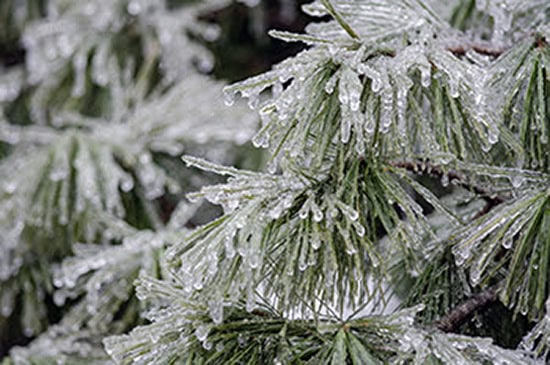
Between March 28 and 30, 2025, a severe winter storm struck northern Michigan with extreme ice accumulation.
The storm caused widespread power outages, dangerous conditions and record levels of infrastructure damage.
“This welcome news comes after months of fighting to ensure northern Michigan communities get the support they need, but the actual costs are still unknown,” Whitmer said.
“The ice storms damaged thousands of utility poles, hundreds of transformers, and destroyed countless miles of power lines. This amendment will help lower the cost for residents who have been paying for the utility repair work following the historic ice storms last year. I want to thank President Trump for meeting with me earlier this week and agreeing to grant further assistance.”
Up North Voice has requested formal comment from the White House and President Donald Trump. As of this evening there has been no response.
The State of Michigan declared an emergency on March 31, 2025, that included over a dozen counties and the Little Traverse Bay Bands of Odawa Indians. The declaration allowed the use of state resources such as the Michigan State Police and the Emergency Management and Homeland Security Division. The state legislature also exempted some school day makeup requirements for districts that had as much as two weeks off school because of the storm.
On July 22, 2025, Trump approved a federal disaster declaration authorizing FEMA Public Assistance funding for emergency work and certain permanent repairs across Alcona, Alpena, Antrim, Charlevoix, Cheboygan, Crawford, Emmet, Kalkaska, Mackinac, Montmorency, Oscoda, Otsego and Presque Isle counties, as well as the Little Traverse Bay Bands of Odawa Indians.
Efforts to secure federal recovery assistance, however, took months.
President Trump did approve a federal disaster declaration on July 22 that authorized FEMA Public Assistance funding for emergency work and specific permanent repairs.
During FEMA’s review process, the agency denied some requested funding, including money meant to address damaged utility infrastructure. State officials then filed an appeal.
FEMA initially denied assistance for:
• Public Assistance Category F, which funds permanent repairs to damaged public utilities.
• Individual Assistance, which helps residents with housing and disaster-related losses.
Gov. Whitmer first appealed those denials on Aug. 25, 2025.
In a letter dated Oct. 22, 2025, FEMA reaffirmed the denial of PA Category F funding, which would have supported permanent repairs to damaged utilities, and Individual Assistance, which helps residents recover from housing damage and disaster-related losses.
“The initial denial of Public Assistance Category F funding had significant implications for rural electric cooperatives and the communities they serve,” said Col. James F. Grady II, director of the Michigan State Police (MSP) and state director of Emergency Management and Homeland Security.
“The MSP Emergency Management and Homeland Security Division stands ready to work with those affected utilities to ensure this newly approved assistance can be accessed as quickly as possible.”
The approval of PA Category F funding has major implications for rural electric cooperatives, which were among the hardest hit and suffered extensive damage to power distribution systems.
For example:
Presque Isle Electric & Gas Co-op (PIE&G), which serves more than 35,000 members in northeast Michigan, reported catastrophic damage. According to the utility:
• 99% of members lost power, some more than once.
• More than 2,800 utility poles, 900 transformers, and 3,800 miles of power lines were destroyed.
• Restoration took over 400,000 work hours and required a complete rebuild of PIE&G’s electric grid in just three weeks.
• Nineteen of 20 substations lost power.
• Estimated recovery costs are $150 million – 115 times more expensive than any storm in the cooperative’s history.
• A $20 monthly emergency storm recovery fee per electric meter was approved by members on June 24, 2025.
• If PIE&G members were forced to repay $150 million plus interest, it would amount to at least $4,500 per household.
Great Lakes Energy (GLE), a not-for-profit electric cooperative serving rural families and businesses across northern and western Michigan, reported:
• Estimated restoration and recovery costs exceed $155 million.
• Without FEMA assistance, costs were expected to be passed directly to GLE members.
• As a not-for-profit co-op, GLE has no investors. According to the utility, every dollar spent must be recovered through member-paid rates.
• Members faced significant and sustained electric rate increases, beginning last year and continuing for many years.
• Rate increases would have covered immediate storm restoration, recovery, and debris cleanup, along with long-term financial impacts including interest on emergency loans and depreciation of damaged infrastructure.
Michigan Rep. Cam Cavitt of Cheboygan said he witnessed the devastation of the storm firsthand.
“Northern Michigan has been doing everything it can to recover for more than a year,” Cavitt said.