





Editor’s Note: Interested in free weekly updates from Northern Michigan? Sign up for the WEEKLY PINE VIEW
By Alicia Noragon
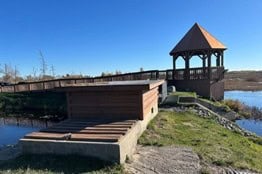
REGION– Elena Piccolo of Roscommon, working with teammate Makenna Schneider, distinguished herself in a six-week renovation project focused on improving student and researcher cabins at the CMU Biological Station on Beaver Island. Her proposal stood out for its clarity, creativity, and practicality, earning especially positive feedback from the project clients. Elena demonstrated strong problem-solving skills and a thoughtful response to the cabins’ unique challenges, delivering realistic, budget-conscious solutions that significantly enhanced functionality, comfort, and overall atmosphere.
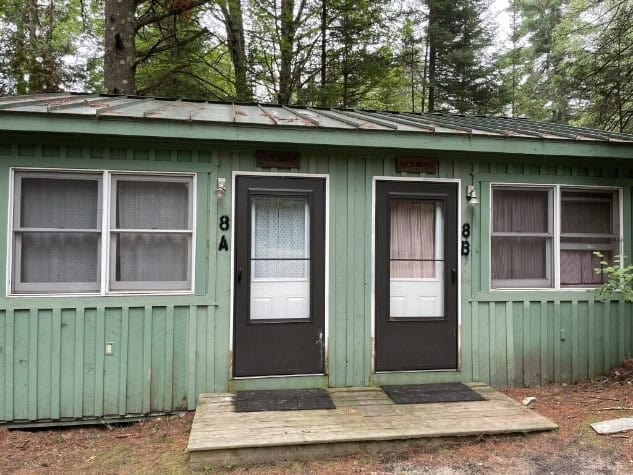
The project addressed the interiors of nine primitive, uninsulated cabins used from May through September by students and visiting researchers. Configured as single-room and duplex units, the cabins primarily serve as spaces for sleeping and personal storage, with studying and social activities taking place elsewhere on site. Renovation goals included creating a more welcoming environment, maintaining existing occupancy levels, increasing storage, providing each guest with a sense of personal space, and ensuring the rooms remained easy to clean and ventilate in a humid climate. All improvements were required to stay within a modest budget of approximately $2,000 per room.
These needs became the focus of the Fall 2025 IND436QR Lighting Design course, where twenty interior design students developed renovation proposals as part of an ongoing collaboration between the Interior Design program, the College of Science & Engineering, and the Institute of Great Lakes Research. The project offered students hands-on experience while supporting real facility improvements at the Biological Station.
Working in teams, students analyzed site conditions, reviewed client-provided measurements and photographs, and developed schematic and final designs addressing comfort, privacy, storage, lighting, and aesthetics within the stated constraints. Each team produced a complete design package, including a concept statement, furniture and material selections, lighting strategies, layouts, 3D visualizations, and a detailed budget. Final proposals were presented to Dr. Kevin Pangle, Director of the Biological Station, and Professor Tanya Domina.